Smart lighting systems
App, switch, sensor, schedule and scene control designed to feel simple every day.
Explore smart lighting systems →
Smart lighting, architectural lighting and complete project support for modern homes, hotels, offices, restaurants and developments across Cyprus.
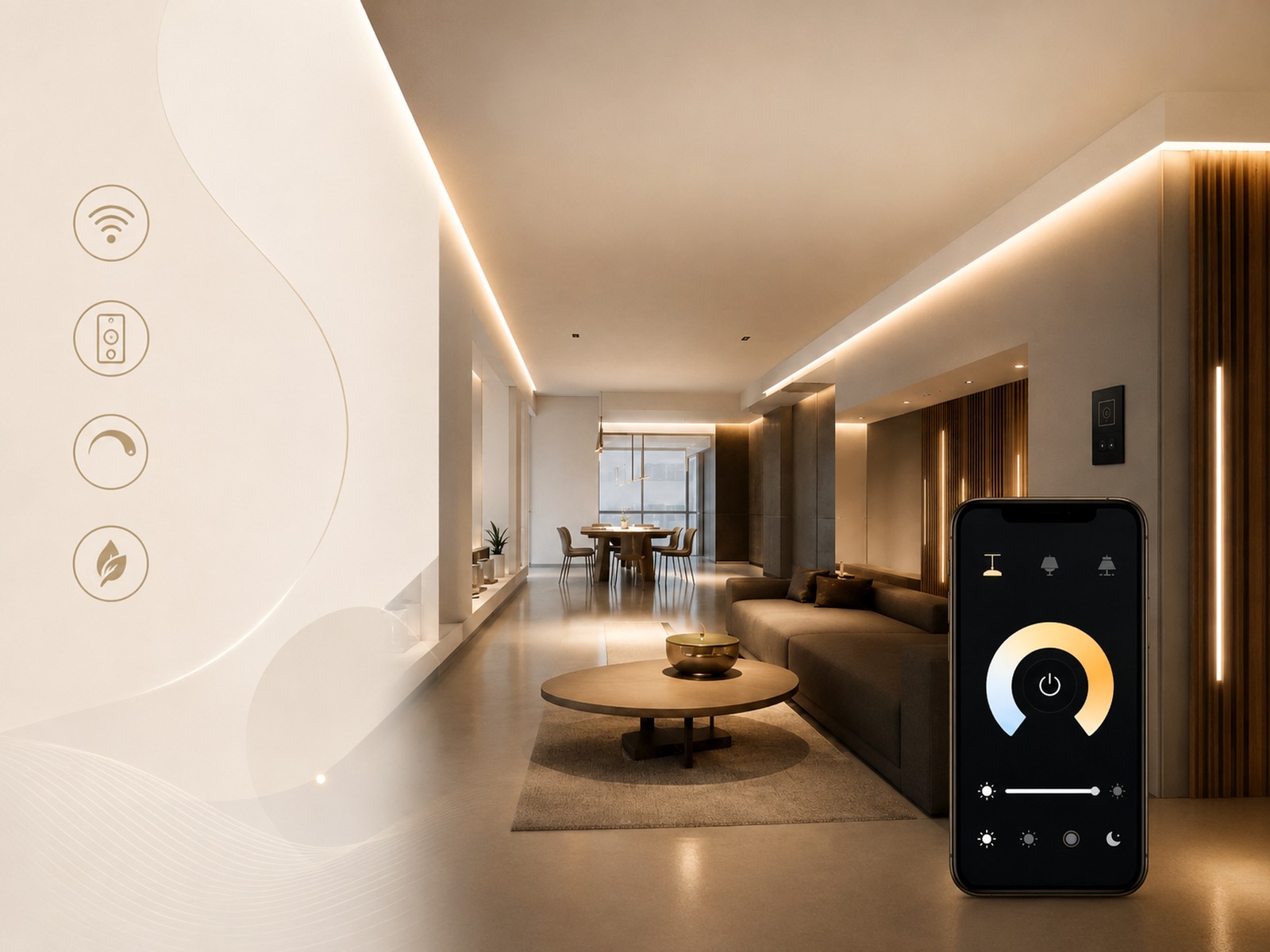
A familiar interface, with every important action still available from the wall.
The new structure mirrors the depth of a large service website while keeping every page relevant to lighting, controls and project delivery.
Rooms, homes, hotels, workplaces, retail, landscape and developments.
02Technology34 topicsWireless, KNX, DALI, Matter, dimming, sensors, drivers and scenes.
03Locations50 areasLimassol districts and project support across the major Cyprus regions.
04Blog24 launch articlesPractical design, specification, installation and commissioning guidance.
 Current offer
Transform one living room, bedroom or chosen space with coordinated smart lighting, app control and standard setup.
From the first concept to products, controls and final commissioning, the system is planned around the space and the people using it.
App, switch, sensor, schedule and scene control designed to feel simple every day.
Explore smart lighting systems →Downlights, tracks, profiles and concealed light planned around the architecture.
Explore architectural lighting →Layered lighting for villas, apartments, renovations and intelligent homes.
Explore residential lighting →Guest-focused lighting for hotels, restaurants, bars and leisure spaces.
Explore hospitality lighting →Comfort, efficiency and visual identity for offices, retail and developments.
Explore commercial lighting →Weather-ready systems for façades, gardens, paths, pools and terraces.
Explore outdoor lighting →
Create a bright working environment, a calm evening or a welcoming arrival with one touch. Keep familiar wall controls while adding the flexibility of scenes, schedules and app control.
The best approach depends on project stage, scale, wiring access and the level of integration required. Compare the three common starting points.
Use professional fittings, drivers and dimming while keeping the control experience straightforward.
Wireless control can add app access, schedules and scenes while retaining elegant wall switches.
KNX supports structured lighting zones, sensors, scenes and integration with wider building systems.
Our support changes with the person leading the project. Select your role to see the practical benefits, deliverables and decisions we coordinate.
We connect light distribution, ceiling details, fixture depth, driver access, circuits and control logic before those decisions become expensive to change.
Architect collaboration →We help create the visual hierarchy of a space through ambient, task, accent, decorative and integrated lighting—then turn it into a practical specification.
Designer collaboration →We structure base specifications, smart upgrades, show-unit scenes and procurement logic for villas, apartment buildings, hospitality and mixed-use projects.
Developer collaboration →Scope can be adapted from focused product support to a complete lighting and controls package.
Layers, focal points, visual comfort, atmosphere and use cases for each space.
Recommended fitting types, optics, outputs, finishes and mounting conditions.
Ceiling interfaces, drivers, circuits, switching zones and access requirements.
Wall controls, app functions, sensors, schedules, scenes and integrations.
Product data, ordering clarity, approved alternates and project-stage questions.
Aiming, dimming levels, colour temperature and final scenes refined on site.
Good lighting requires decisions at the correct stage. Our process keeps aesthetics, technical requirements, controls and installation aligned.
We review the space, plans, style, budget, timeline and desired level of control.
We define layers of light, fitting types, important visual moments and scene logic.
We coordinate positioning, circuits, drivers, switching and integration with the project team.
Products are supplied, controls configured and final scenes refined in the completed space.
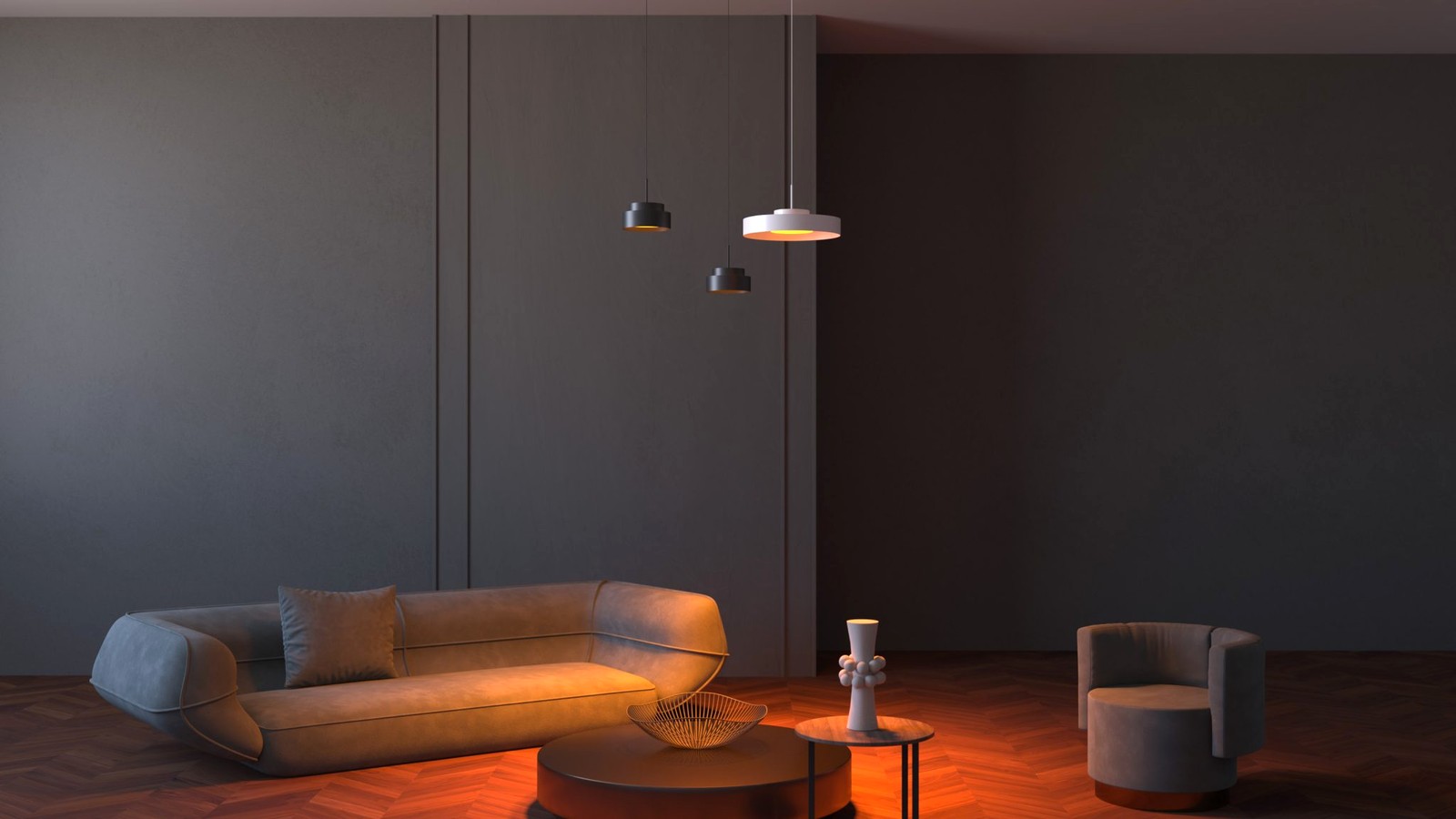
See how fittings, colour temperature, dimming and scenes work together.
Explore architectural, decorative and integrated lighting details from our own work and showroom environments.
Select the project context and priorities. The tool prepares a preliminary scope you can carry into the enquiry form or download for your team.
These are some of the most common questions about smart lighting, LED lifespan, Wi‑Fi, electricity use and how to upgrade a room properly.
A smart lighting system connects lights, LED strips, drivers, switches, sensors and controllers so scenes, dimming and colour temperature can be managed easily.
Better comfort, atmosphere, convenience, automation and often lower electricity use thanks to LED efficiency, dimming and scheduling.
Not always. Some systems use Wi‑Fi, while others use gateways, Bluetooth, wireless control networks or wired systems such as KNX.
No. Most professional smart lighting uses efficient LED technology and often helps reduce wasted energy through dimming and scenes.
Yes, especially if you want better control, a more premium result and a room that changes its atmosphere easily throughout the day.
Smart lighting can include downlights, magnetic lighting, LED strips, track lights, wall lights, decorative pendants, outdoor lights and tunable-white fittings.
Original articles for homeowners, architects, designers, developers, electricians and hospitality teams.
How to make smart-lighting decisions before ceilings close and finishes begin.
Read article →A practical comparison for Cyprus homes, villas and commercial projects.
Read article →What architects, engineers and contractors need to know about addressable lighting.
Read article →We added practical answers to the questions clients ask most often about smart lights, LEDs, controls, Wi-Fi, cost, lifespan and whether smart lighting is really worth it.
A smart lighting system connects compatible lights, drivers and controls so you can manage brightness, colour temperature, scenes, schedules and automation from wall switches, keypads, sensors or an app.
The best smart lighting is the system that fits the project correctly: reliable fittings, quality drivers, smooth dimming, good colour consistency, useful app control, physical wall controls and the right level of automation for the space.
Smart lights usually cost more upfront than basic lighting and they need planning, compatible components and correct setup. Cheaper products can also suffer from flicker, weak app performance or poor reliability.
Smart lighting improves comfort, convenience and atmosphere. It allows dimming, scene setting, colour-temperature changes, scheduling, remote control, better energy management and a more premium user experience.
No. Most smart lighting systems use LED technology, which is very energy efficient. There can be a small standby consumption for controls or gateways, but day-to-day running costs are generally low.
A simple example is a living room with smart downlights, wall lights and an LED strip that can dim from 1% to 100%, change colour temperature, and switch between scenes such as Welcome, Relax, Movie and Night from an app or wall switch.
Not always. Some products use Wi-Fi, but many professional systems use Bluetooth, Zigbee, RF, DALI, KNX or a dedicated gateway. Internet access is not always required for local control.
You can use smart lighting through an app, a smart switch, a keypad, motion sensors, schedules or automation scenes. Once configured, daily use is usually very simple.
For many homes and professional projects, yes. It adds flexibility, better ambience, easier control and long-term value, especially in living rooms, bedrooms, hospitality spaces and high-end developments.
It depends on the quality of the fixture and driver, but many LED smart lights are rated for around 25,000 to 50,000 hours or more when properly specified and installed.
Costs vary from a small single-room setup to a full-home or multi-unit system. The final price depends on the number of fittings, control method, automation level, installation conditions and product quality.
LEDs themselves are not automatically unhealthy, but poor-quality lighting can create glare, flicker or overly harsh cool light, which may cause visual discomfort. Good warm, flicker-free LEDs are much more comfortable.
You can make a room smart by using compatible smart lamps, smart switches, smart drivers or controllers for the fixtures, then grouping them into scenes and controls that match how the room is used.
The lifespan of an LED often falls within the 25,000 to 50,000 hour range, and sometimes higher, depending on heat management, driver quality and overall system design.
Smart lighting can include bulbs, downlights, track lights, LED strips, linear profiles, decorative pendants, wall lights, outdoor fittings, sensors, dimmers, smart switches and fully integrated KNX or DALI lighting systems.
We added the most common questions clients ask before they choose smart lighting, dimming, tunable white and control systems.
A smart lighting system combines compatible light fittings, LED drivers, switches, sensors and control software so you can manage brightness, colour temperature, scenes and schedules from wall controls, mobile apps or automation.
The best smart lighting is the system that matches the project properly. For one property that may mean wireless smart switches and dimmable lighting, while for a larger villa or development it may mean a more advanced wired or KNX-based solution. Reliability, dimming quality, driver quality and user experience matter more than marketing alone.
Smart lights can cost more initially than standard lighting, and the system needs proper planning so fittings, drivers, dimming and controls all work together. Very cheap smart products can also lead to weaker dimming performance, inconsistent colour and shorter life.
Smart lighting gives you better control of ambience, comfort and function. You can dim lights smoothly, change colour temperature, create scenes, automate routines, improve convenience and reduce wasted energy by only using the light you need.
No, smart lights do not usually use a lot of electricity. Most LED-based smart lighting systems are energy efficient, and smart control can reduce consumption further by dimming lights, scheduling operation and switching unused areas off.
A good example is a living room with dimmable ceiling lights, wall lights and LED strip lighting controlled from one smart switch and an app. You can create scenes such as Welcome, Relax, Cinema or Night and change the whole atmosphere instantly.
Not always. Some smart lighting systems use Wi‑Fi, some use Bluetooth, some use dedicated wireless gateways, and others use wired control systems such as KNX or DALI. The best approach depends on the project and how robust the control needs to be.
You use smart lighting through wall switches, keypads, sensors, schedules or a mobile app. The lights can be grouped by room or function, and scenes can be created so one command changes multiple lights at once.
For many homes and professional projects, yes. Smart lighting improves comfort, flexibility and the way a space feels. It is especially worthwhile when good lighting design, dimming, tunable white and easy control are all important.
Quality smart LED lighting can last for many years. Actual life depends on the LED engine, driver quality, heat management and operating conditions, but professionally specified products are designed for long-term use.
Smart lighting can range from an affordable single-room upgrade to a larger investment for a whole house, hotel or development. Cost depends on the type of fittings, drivers, switches, scenes, app control and whether the system is wireless or wired.
LED lighting itself is not inherently unhealthy when it is designed properly. Problems usually come from poor-quality glare, uncomfortable brightness, flicker or unsuitable colour temperature. Good specification and proper dimming help create a much healthier visual environment.
You can make a room light smart by replacing or upgrading the fittings, drivers, switches or control modules with compatible smart components. In many cases, a room can be upgraded with wireless controls, dimming and app control without major rewiring.
The lifespan of an LED varies by product, but quality LEDs are typically rated for many thousands of hours. In practice, life depends heavily on the quality of the LED, the driver and how well heat is managed inside the fitting.
Smart lights can include downlights, track lights, linear profiles, LED strips, wall lights, decorative pendants, lamps, outdoor fittings and tunable-white systems. They can also be grouped into wireless smart lighting, wired smart lighting and building-integration systems such as KNX.
Share drawings, inspiration, room details or the existing condition. We will help define the fittings, controls, drivers, circuits and lighting scenes.